
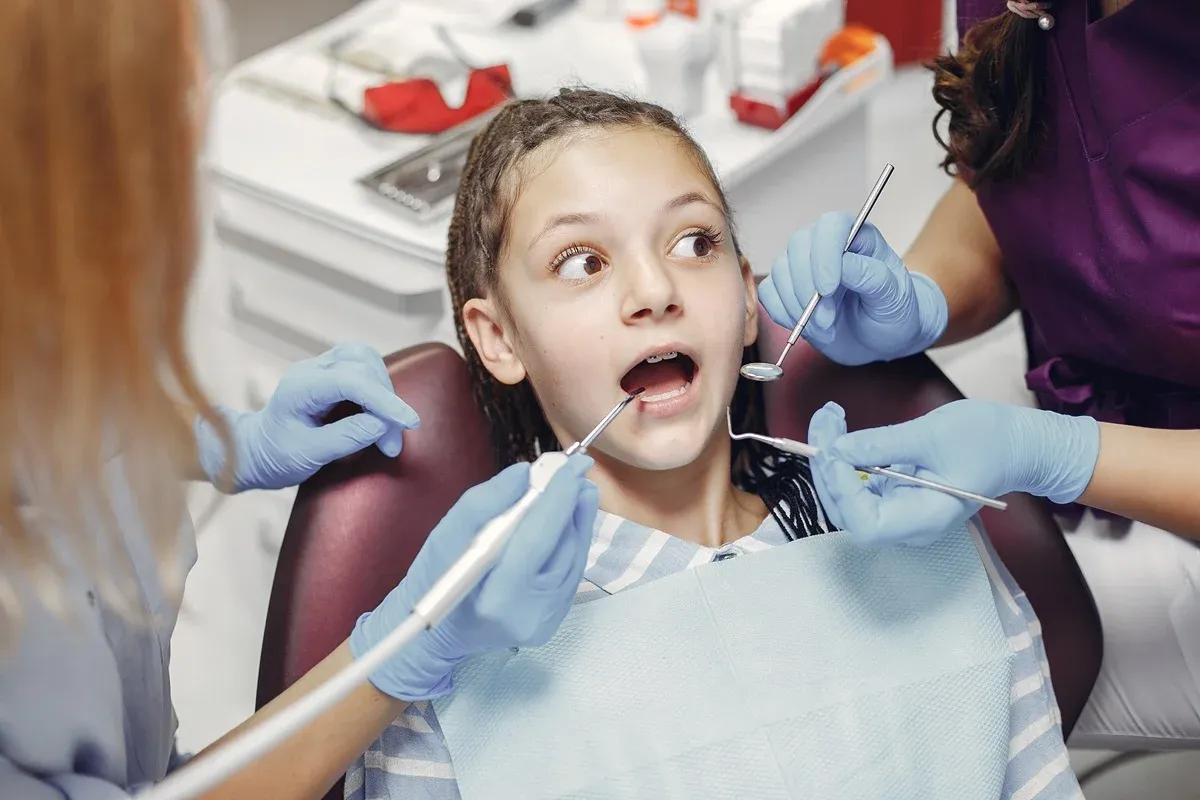
You might be looking at your child’s smile and wondering if those crooked baby teeth, the thumb sucking, or the constant cavities are just a phase, or if they are quietly setting your child up for years of braces and dental work later on. You might also feel torn. Part of you thinks “They’re just baby teeth, they fall out anyway,” while another part of you worries you could be missing something important and that it might be time to consult a kids dentist in Peekskill.
That tug of worry is very common. Parents are busy, dental advice can feel confusing, and no one hands you a simple roadmap for how early oral health choices affect future orthodontic treatment. Because of this, it is easy to delay, hope things “straighten out,” and only act once a problem is obvious and your child is already anxious or in pain.
Here is the simple summary. Early pediatric oral health habits and regular visits to a pediatric dentist and orthodontist can dramatically reduce the risk, length, and cost of future orthodontic treatment. Healthy baby teeth help guide adult teeth into better positions. Good hygiene and diet protect jaw growth and prevent infections that can shift teeth. Early orthodontic monitoring can catch problems while they are still small and easier to correct.
So where does that leave you as a parent who just wants to do the right thing without overreacting or overspending?
How do early oral habits shape your child’s future orthodontic needs?
Think of your child’s mouth as a growing construction site. Baby teeth are not just temporary chewing tools. They act as placeholders and guides for the adult teeth waiting underneath. When baby teeth are lost too early from decay or trauma, the neighboring teeth often slide into that empty space. This can block the path of the adult tooth and set up crowding or misalignment later.
For example, imagine a 4 year old who has multiple cavities that are left untreated because “they’re just baby teeth.” One tooth eventually gets infected and must be removed. The teeth next to that space start to drift. By the time the adult tooth is ready to come in, the space is too narrow. That child may now need more complex orthodontic treatment, possibly even extractions, as a teenager. The original problem started years earlier with untreated decay.
Habits like thumb sucking, extended pacifier use, or mouth breathing can also change how the jaws grow. A child who constantly sucks a thumb can push the upper front teeth forward and narrow the upper jaw. Mouth breathing, often from allergies or enlarged tonsils, can keep the tongue in a low position and affect the way the upper jaw develops. These changes are not just cosmetic. They can affect chewing, speech, and even sleep.
Because of this, you might feel a growing sense of pressure. You are told to “watch it” but not always given clear timelines or steps. Waiting can feel safer in the moment, yet the cost of waiting often shows up years later in longer and more complicated orthodontic treatment.
The good news is that small, steady steps now can protect your child’s future smile. Simple routines like twice-daily brushing with fluoride toothpaste, limiting sugary drinks, and staying current with checkups truly make a difference. Resources such as these practical oral health tips for children can give you a clear starting point at home.
When does a pediatric dentist or orthodontist really need to get involved?
You might wonder if you are supposed to schedule orthodontic visits when your child still has mostly baby teeth, or if that is overdoing it. Many parents wait for a school screening or a dentist’s urgent referral, yet professional guidelines recommend a more proactive path.
According to pediatric dental experts, children should begin regular dental visits by their first birthday or within 6 months of the first tooth. Ongoing checkups allow the dentist to watch growth patterns, catch decay early, and guide you on habits. The American Academy of Pediatric Dentistry provides clear recommendations on the periodicity of examinations and preventive services. This type of routine care is your first line of defense against later orthodontic complications.
For orthodontics, many specialists suggest an initial evaluation around age 7. By then, key permanent teeth have started to appear, and growth patterns are easier to assess. This does not mean braces at 7. It means someone is watching the roadmap, looking for early red flags such as crossbites, severe crowding, or jaw discrepancies that are far easier to guide during growth than after it.
Imagine two children. Both have mild crowding and a narrow upper jaw. One is monitored by an orthodontist starting at age 7. She receives a simple appliance for a short time to gently widen the upper jaw and create space. She later needs a shorter phase of braces as a teen. The other child is not seen until age 13. Growth has slowed, the jaw is harder to change, and teeth are now stuck in poor positions. Treatment is longer, more complex, and more expensive. The original difference was early monitoring.
Because of stories like these, it becomes clear that the connection between kids’ oral health and braces later is not just about looks. It is about timing, prevention, and giving your child more comfortable options later in life.
What are the real tradeoffs of early care versus waiting?
Parents often compare two paths in their minds. Spend time and money on early dental and orthodontic care now, or hold off and “see what happens,” accepting that future orthodontic treatment may be more intense. It can help to see these tradeoffs side by side.
| Approach | Short-Term Experience | Long-Term Impact On Orthodontic Needs | Emotional & Financial Considerations |
| Consistent early pediatric dental care and orthodontic monitoring | Regular cleanings, occasional X-rays, early habit guidance, possible short early treatments | Lower risk of severe crowding, better jaw growth, shorter and simpler braces, less chance of extractions | Predictable smaller costs spread over time, fewer emergencies, child builds trust and confidence with providers |
| Minimal early care, waiting until problems are obvious | Fewer visits at first, higher risk of untreated cavities, habits continue unchecked | Higher chance of complex misalignment, longer braces, more likelihood of extractions or even jaw surgery in rare cases | Potentially larger one-time costs, higher stress, child may associate dental visits with pain or crisis |
| Strong home care but irregular professional monitoring | Good brushing and diet, but fewer professional cleanings and fewer growth checks | Some protection from decay, yet hidden issues like jaw discrepancies or impacted teeth may go unnoticed | Lower immediate costs, but unpredictable future expenses if unseen problems surface later |
Research supports the idea that prevention and early guidance protect children from avoidable problems. Trusted sources such as the National Institute of Dental and Craniofacial Research offer clear information on children’s oral health and development, which can help you understand what is normal and what deserves a closer look.
What can you do right now to protect your child’s future smile?
When you are already busy, you need steps that are clear and realistic, not a long list of “shoulds” that just add guilt. Here are three focused moves that make a real difference in long term orthodontic health for children.
1. Lock in simple, consistent home habits
Start with what happens in your home every day. Help your child brush twice a day with a fluoride toothpaste. For younger kids, you do the brushing, then let them “practice” after, so you know the teeth are truly clean. Floss between any teeth that touch. Limit sugary drinks and sticky snacks to mealtimes rather than constant grazing. These small habits protect baby teeth, which protects the space and guidance needed for adult teeth to come in more naturally.
Watch for mouth breathing, snoring, or heavy thumb sucking, especially past age 3 or 4. These are gentle signals to bring up with a pediatric dentist or pediatrician, since they can affect jaw growth and tooth position over time.
2. Schedule and keep regular pediatric dental visits
If your child has not seen a dentist in the last 6 to 12 months, make that your next step. Choose a pediatric dentist if possible, since they are trained to work with children’s behavior and growth patterns. Regular checkups are not just about cleaning. They are about tracking growth, catching cavities before they cause pain or infections, and spotting early signs of crowding or bite problems.
Use these visits to ask concrete questions. “Do you see any signs that might mean braces later?” “Are there habits we should work on at home?” “When would you suggest an orthodontic evaluation for my child?” Clear answers reduce worry and help you plan instead of react.
3. Plan an early orthodontic evaluation, even if teeth “don’t look that bad”
If your child is around age 7 or older and has never seen an orthodontist, consider scheduling a baseline evaluation. This does not commit you to treatment. It gives you information. The orthodontist can check how the upper and lower jaws fit, whether there is enough space for incoming adult teeth, and whether early guidance would be helpful or if simple observation is enough.
Use this visit to understand the likely timeline. Ask what might happen if you wait, and what could be easier if addressed now. That way, if your child does need braces later, you will not be surprised. You will know the “why” behind the plan, and your child will already be familiar with the office, which often lowers anxiety.
Where do you go from here?
If you are feeling a mix of relief and concern right now, that is normal. You care about your child’s health, and you do not want to miss a window where simple steps could spare them from more intense treatment later. You also do not want to live in constant worry about every tooth that comes in a little crooked.
You do not need to solve everything at once. Focus on one step at a time. Strengthen home care. Get current with pediatric dental checkups. Then add in early orthodontic monitoring when the time is right. Each step builds a safer path for your child’s growing smile and can reduce the need for extensive treatment later on.
Most of all, remember this. You are not behind. You are paying attention now, and that matters. With steady support from a trusted pediatric dentist and orthodontist, you can protect your child’s oral health today and give them a more confident, comfortable smile for years to come.