
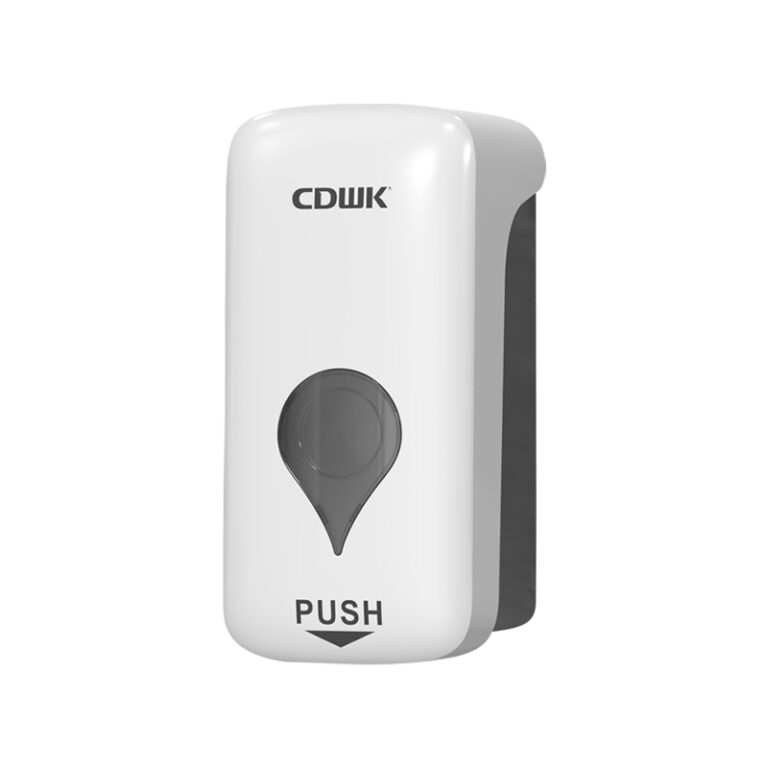
Inside a hand press soap dispenser, the operating principle is almost elegant in its simplicity. Pressing down on the pump head compresses a return spring while pushing a piston through a cylinder. That motion draws liquid soap from the reservoir through a one-way inlet valve and forces a measured dose out through the dispensing nozzle. Releasing the pump allows the spring to reset the mechanism, ready for the next use.
Because the design relies entirely on mechanical force, there is nothing to calibrate and nothing to power. The absence of electronics means no batteries to replace, no circuit boards to fail, and no sensors to misread a hand. In environments where reliability matters more than novelty, that mechanical simplicity is precisely the point.
The components are built to endure. A well-constructed pump assembly can deliver thousands of doses before showing signs of wear. When something does eventually fail, it is usually the pump head or the internal valve rather than the entire housing, and replacement parts are inexpensive and quick to install.
Where Hand Press Dispensers Make the Most Sense
Not every restroom needs touchless operation, and in plenty of settings, a hand press soap dispenser is genuinely the smarter choice. Smaller offices, older buildings, and facilities with limited maintenance budgets often find that a simple mechanical pump delivers everything they need without the added complexity of electronic models.
Industrial environments make an especially strong case. Workshops, warehouses, garages, and outdoor facilities expose fixtures to dust, moisture, and temperature swings that can damage sensors and electronics. A mechanical pump keeps working regardless of conditions, which makes it a practical necessity rather than a compromise.
Cost is another factor. Hand press dispensers typically cost a fraction of what sensor-operated models command, and they require no batteries or power connections. Across a facility with multiple restrooms, those savings add up quickly and free budget for other priorities.
Bulk-Fill Versus Sealed Cartridge Formats
Hand press soap dispensers generally come in two formats, and the right choice depends on what a facility values most. Bulk-fill models are refilled from large containers of liquid soap, which makes them economical and reduces plastic packaging waste. Facility managers also gain flexibility in selecting soap products to match user preferences or skin sensitivities.
Sealed-cartridge models take a different approach. Factory-filled cartridges snap into the dispenser, keeping the soap sealed until the moment it is dispensed. Cartridge changes are clean and quick, and the risk of contamination during refilling is eliminated entirely. Healthcare facilities, food service operations, and childcare centers often prefer sealed systems for these hygiene advantages, even though the cost per dose runs higher.
Material Choices and Their Trade-Offs
Hand press soap dispensers are available in a range of materials, each with distinct advantages. Plastic models are lightweight, affordable, and resistant to many chemicals, making them a practical choice for most commercial settings. They also come in a wide variety of colors and finishes to match restroom decor.
Stainless steel dispensers offer superior durability and a premium appearance. They resist corrosion, clean up easily, and hold up well under heavy use, which makes them a natural fit for high-traffic restrooms and clinical environments. Chrome-plated models provide a polished, reflective finish that suits hospitality settings, though they tend to show fingerprints and water spots more readily than brushed stainless steel.
The material affects not just appearance but lifespan. A stainless steel unit may last a decade or more in a busy restroom, while a plastic unit in the same environment may need replacement after a few years. Weighing upfront cost against expected service life is part of making a sound selection.
Getting the Dose Right
The volume of soap released with each press is a detail that is easy to overlook but has real consequences. Dispensers that release too much soap waste product and leave messy residue around the sink. Dispensers that release too little force users to press multiple times, which accelerates wear on the mechanism and frustrates the people using them.
Most hand press dispensers deliver roughly half a milliliter to one milliliter per stroke, which is generally sufficient for effective handwashing. Some models offer adjustable dosing, letting facility managers fine-tune the volume to suit their soap formulation and user preferences. Soap viscosity deserves attention as well, since thick, gel-like soaps may not flow properly through dispensers designed for thinner liquids.
Maintenance That Keeps Dispensers Working
Hand press soap dispensers need less attention than electronic models, but they are not maintenance-free. Regular cleaning prevents soap buildup around the nozzle, which can clog the dispenser and create an unsightly mess. Periodic checks of the pump mechanism catch wear before it leads to failure.
Because the design is so straightforward, repairs are usually simple. The pump assembly can often be swapped out without removing the entire unit from the wall, extending service life and keeping ownership costs low. Staff can be trained to handle these tasks quickly, which minimizes downtime and keeps restrooms fully operational.
A Dependable Fixture in an Automated World
As restroom fixtures grow more connected and automated, the hand press soap dispenser remains a dependable, uncomplicated solution. It needs no firmware updates, no battery replacements, and no network connection. It simply dispenses soap when someone presses the pump, day after day, year after year. For many facilities, that quiet reliability is exactly what they need.