
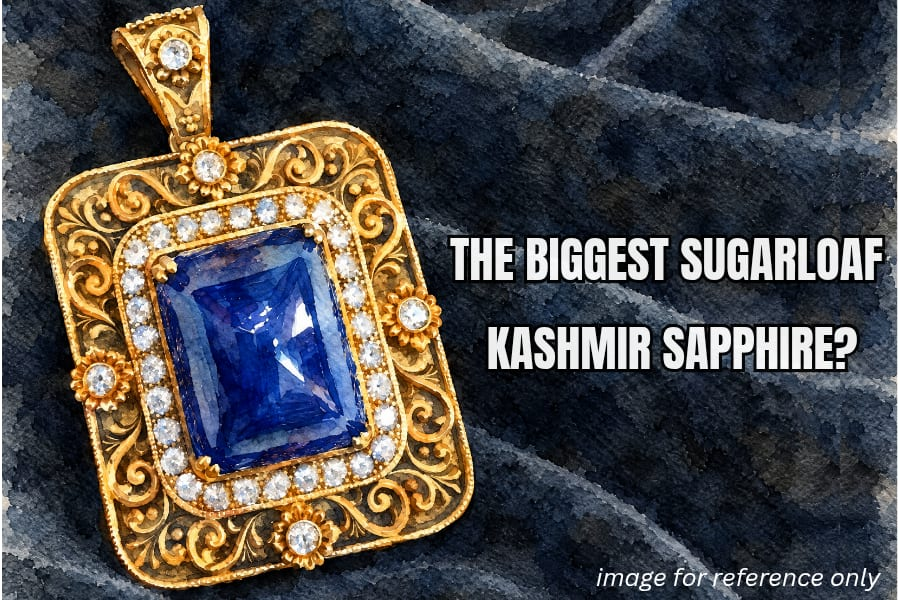
The Peacock Blue pendant occupies a fascinating place in the history of Kashmir blue sapphires. Its significance extends beyond its royal association to an extraordinary gemstone weighing more than 60 carats, cut in the distinctive sugarloaf cabochon cut. The pendant belonged to the Maharajas of Kashmir and was gifted to a foreign diplomat by the second Maharaja, Maharaja Ranbir Singh, who ruled Jammu and Kashmir from 1856 to 1885. Much of the information related to the blue sapphire in the historic pendant, stems from trade talk and verbal references.
The Peacock Blue story combines royal heritage, exceptional gemstone size and the enduring fascination surrounding historic Kashmir sapphires. Its 60-plus-carat sapphire represents an outstanding example of the sugarloaf cabochon cut, a cut that showcases the gemstone’s color and visual depth. The pendant’s reported history, gives it a distinctive identity among important royal jewels associated with Kashmir. The most consistently talked about narrative is that, the it was the entire pendant and not just the Kashmir sapphire in it – that was referred to as the Peacock Blue.
In the world of traceable gemstones, however, documented examples establish an important reference point. The Vanderbilt Sapphire, weighing 42.68 carats, stands out as a magnificent sugarloaf-cut Kashmir blue sapphire. Set in an early twentieth-century Tiffany & Co. diamond brooch, the gemstone is distinguished by its royal blue color and documented Kashmir origin. Gemological reports accompanying the jewel identify the sapphire as unheated. The gemstone has been proved to exist and has been seen, in a high profile auction in recent times. The Vanderbilt Sapphire achieved a remarkable auction result at Phillips’ Geneva Jewels Auction: V on 10 November 2025. The brooch sold for, approximately US3.6million,comfortablyexceedingitspresaleestimateofaroundUS1.2 million.
The comparison between the Vanderbilt Sapphire and Peacock Blue highlights two different aspects of gemstone history. The Vanderbilt Sapphire has a documented auction appearance, an established weight and published gemological assessments. The Peacock Blue pendant with its big Kashmir sapphire, carries a royal narrative centered on a substantially larger sapphire, with its historical identity linked to the Kashmir Maharajas. However neither the pendant nor its Kashmir sapphire, have been seen in recent times. Auction information related to the pendant or the sapphire, have so far never been recorded.
The Vanderbilt Sapphire therefore holds a clear place among the largest documented and traceable sugarloaf-cut Kashmir sapphires, supported by its recorded weight and auction history. Peacock Blue remains a compelling part of Kashmir’s royal gemstone heritage, associated with a sapphire exceeding 60 carats. Together, these jewels illustrate why exceptional Kashmir sapphires continue to inspire collectors, historians and gemstone specialists worldwide. Some experts suggest that until the Kashmir blue sapphire from the Peacock Blue pendant, reveals itself, the possibility of it being lost forever or having been recut, cannot be discounted. This professional opinion needs to be respected.