
The blockchain industry has spent years promoting ambitious visions of decentralized finance, tokenized assets, and artificial intelligence-powered economies. Yet despite technological advancements, many projects continue to struggle with the same fundamental challenge: transforming innovation into sustainable real-world adoption.
That challenge became a central theme at the 2026 Crypto Valley Conference (CVC), one of Europe’s most respected gatherings for blockchain leaders, institutional investors, regulators, and technology innovators. Held annually in Switzerland’s renowned Crypto Valley ecosystem, the event has established itself as a key venue for discussions surrounding digital assets, regulatory frameworks, stablecoins, real-world asset (RWA) tokenization, and emerging Web4 technologies.
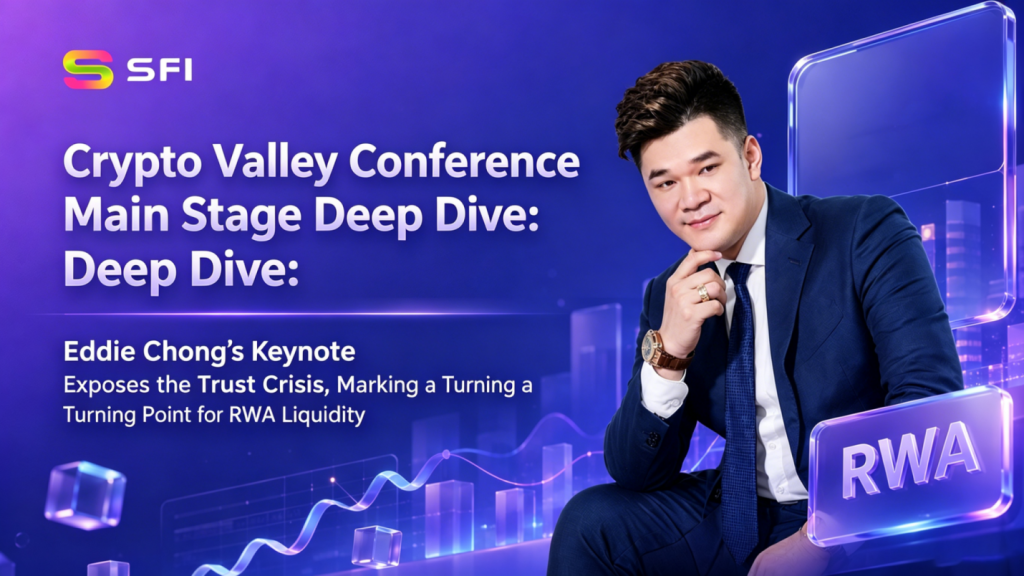
Among this year’s featured speakers, one presentation generated notable attention from both industry participants and institutional stakeholders. Eddie Chong, Chairman and CEO of SFI Group, took the main stage to address what he described as the two defining obstacles preventing the next phase of blockchain adoption: the erosion of trust and the persistent lack of liquidity.
Rather than focusing solely on future possibilities, Chong presented SFI’s evolving ecosystem as an example of how infrastructure, compliance, payments, and real-world utility can work together to support a functioning digital economy.
A Call to Refocus on Industry Fundamentals
In his keynote presentation, titled “Back to the Fundamentals: The Crisis of Trust – Why Liquidity is Dying and How We Must Evolve,” Chong challenged some of the assumptions that have shaped the blockchain industry over the past several years.
According to him, many of the issues facing digital assets today are not caused by insufficient technology. Instead, they stem from a lack of confidence among users, institutions, and regulators.
He pointed to several recurring industry trends:
- Tokenized real-world assets frequently struggle to attract sustainable liquidity.
- Stablecoins often lack meaningful consumer spending opportunities beyond trading activity.
- AI-powered applications are developing rapidly but still face limitations when interacting with regulated financial systems.
Chong argued that fragmented regulations, inconsistent compliance standards, and concerns surrounding asset security have collectively slowed institutional adoption and restricted capital movement across blockchain ecosystems.
As a result, many projects possess technological potential but fail to generate the trust necessary for large-scale participation.
Building a Framework for the Web4 Era
A major focus of Chong’s presentation was the emergence of what he described as the Web4 economy.
Unlike earlier blockchain models centered primarily on human participation, Web4 introduces intelligent systems capable of acting as economic entities. These AI agents may eventually hold digital assets, execute transactions, manage payments, and interact independently with financial infrastructure.
However, Chong noted that most existing blockchain systems were designed before this shift became a realistic possibility.
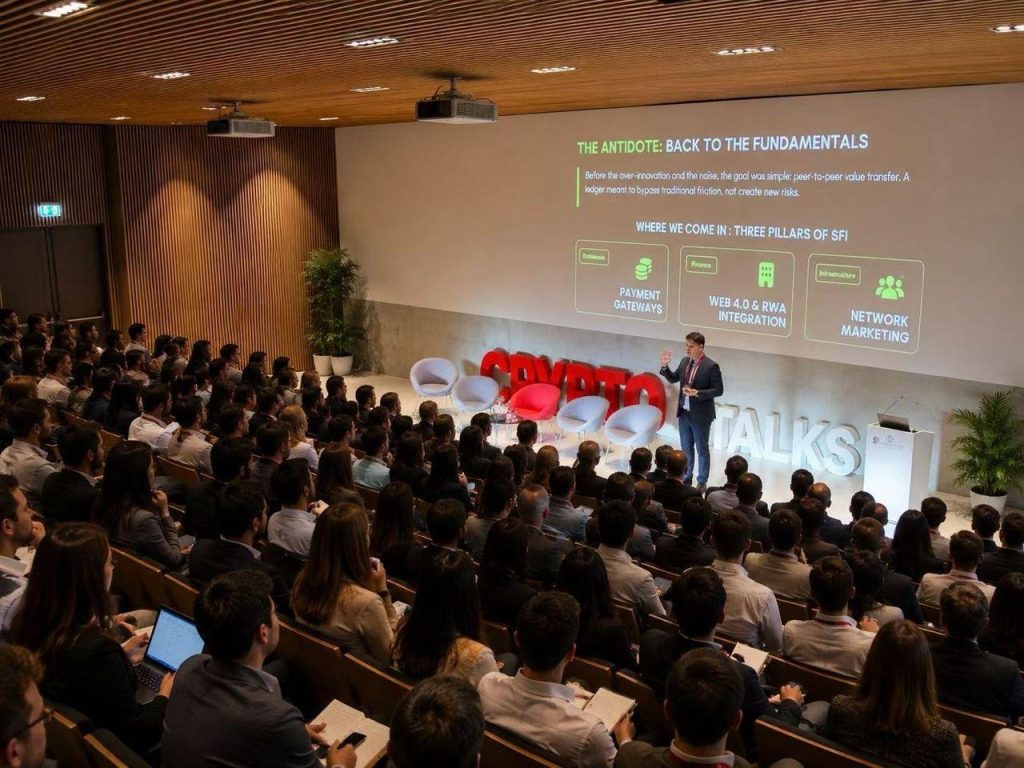
To address that gap, SFI has been developing an integrated ecosystem built around three interconnected pillars:
- Stablecoins as a payment foundation
- Real-world assets as a source of economic value
- Artificial intelligence as an operational engine
Together, these components are intended to create a self-reinforcing ecosystem capable of supporting both human users and autonomous digital participants.
Components of the SFI Ecosystem
During the presentation, Chong outlined several initiatives operating within the broader SFI framework.
Solulu Club
Designed as a community and engagement platform, Solulu Club has attracted more than 200,000 active users and serves as a foundation for ecosystem participation and network growth.
Solulu Pay
The payment division provides a compliance-oriented infrastructure spanning more than 100 countries, enabling users to move between traditional currencies and digital assets within regulated environments.
Caviar
As SFI’s luxury commerce platform, Caviar seeks to bridge digital assets with consumer spending by providing access to premium products and brand partnerships, including collaborations involving Lamborghini and Fendi.
COPX DAO
COPX DAO introduces AI-assisted quantitative trading capabilities intended to enhance ecosystem utility and support additional value creation opportunities.
RWA Incubator and Exchange
The platform focuses on supporting the complete lifecycle of tokenized assets, including development, issuance, management, market access, and eventual liquidity pathways.
Collectively, these initiatives reflect SFI’s broader objective of connecting payments, commerce, tokenized assets, and artificial intelligence within a single operational framework.
Liquidity Requires More Than Narratives
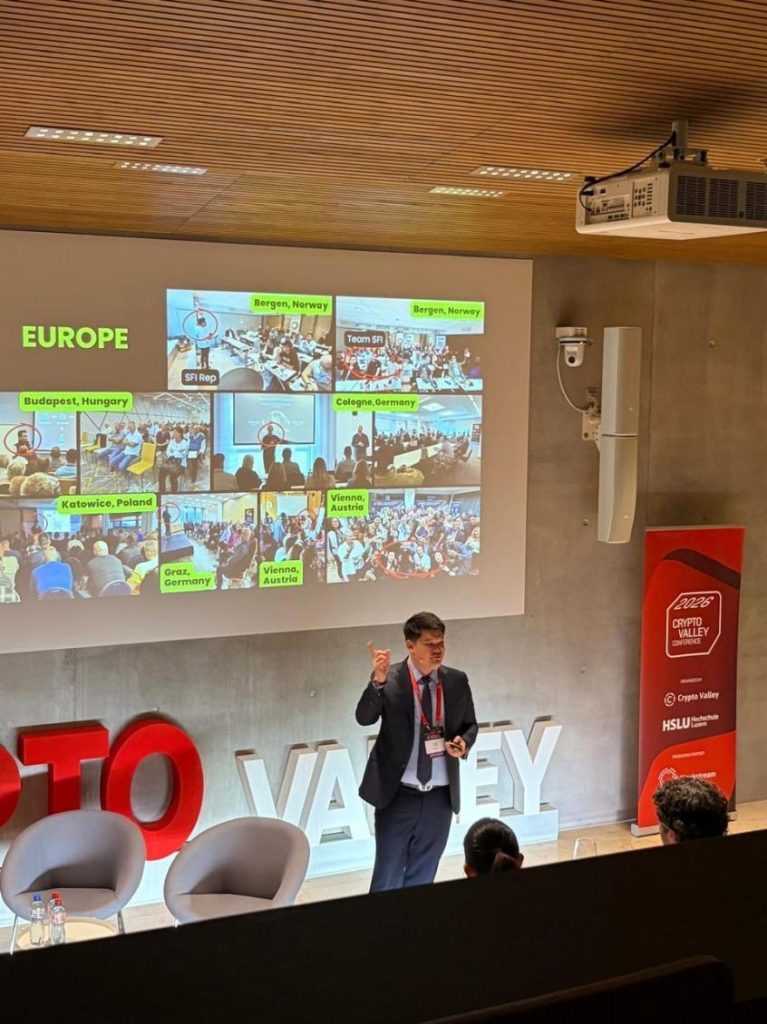
One of the most widely discussed themes from Chong’s keynote centered on liquidity.
He argued that liquidity cannot be manufactured through promotional campaigns or short-term market enthusiasm alone.
Instead, sustainable liquidity emerges from real economic activity, trusted infrastructure, transparent operations, and recurring user engagement.
According to Chong, projects that successfully combine these elements are more likely to attract both institutional participation and long-term capital.
His remarks resonated with attendees who have observed repeated cycles of speculative growth followed by declining activity across various segments of the blockchain market.
For many participants, the discussion reflected a growing industry shift toward practical execution and measurable utility.
Institutional Engagement Beyond the Main Stage
Following the keynote session, Chong participated in a series of private meetings with blockchain infrastructure providers, licensed custodians, payment companies, regulatory advisors, and artificial intelligence developers from across Europe.
Topics discussed reportedly included:
- Regulatory compliance strategies
- Institutional custody solutions
- Stablecoin settlement mechanisms
- Cross-border payment infrastructure
- AI-driven financial applications
- Digital asset interoperability
Several organizations expressed interest in pursuing additional conversations related to infrastructure partnerships and technology integration opportunities.
The discussions highlighted increasing demand for solutions that combine innovation with operational and regulatory readiness.
Switzerland’s Regulatory Momentum
The timing of Chong’s keynote coincided with another significant development for the digital asset sector.
On the same day, authorities in Zug introduced new guidance relating to tokenized assets and real-world asset markets. The announcement addressed areas such as issuance standards, compliance expectations, circulation requirements, and cross-border settlement considerations.
As one of the conference participants involved in discussions surrounding the announcement, Chong emphasized the broader significance of the development.
In his view, clearer regulatory frameworks will help accelerate industry maturation by providing greater certainty for institutions, investors, and infrastructure providers.
He suggested that future market leaders will likely be organizations capable of aligning innovation with evolving regulatory standards while maintaining scalable business models.
A Defining Moment for the Next Stage of Blockchain Adoption
The conversations that unfolded at the Crypto Valley Conference reflected a broader transformation taking place across the blockchain industry.
As markets mature, investors and institutions are increasingly evaluating projects based on infrastructure, compliance, utility, and sustainable business activity rather than speculative narratives alone.
SFI’s presentation highlighted its ambition to position itself within that emerging landscape through the integration of stablecoin payments, tokenized assets, artificial intelligence, and regulatory-focused operations.
Looking ahead, the company plans to continue expanding its efforts in three key areas:
- Increasing real-world stablecoin adoption
- Enhancing liquidity solutions for tokenized assets
- Supporting AI-enabled financial interactions
For Chong, the future of Web4 will be determined less by ambitious promises and more by the ability to build systems that users, businesses, and institutions can rely on every day.
As he concluded during the conference, the next chapter of digital finance will belong to organizations capable of combining compliance, functionality, and long-term infrastructure development into a practical and scalable ecosystem.
About SFI
SFI is a technology-driven ecosystem focused on advancing the convergence of stablecoins, real-world assets, artificial intelligence, and digital payments. Through platforms including Solulu Club, Solulu Pay, Caviar, COPX DAO, and its RWA initiatives, the company aims to support the development of a more connected and utility-driven Web4 economy.
Follow the SFI Ecosystem:
SFI: https://x.com/SFI_AI
SoluluPay: https://x.com/SoluluPay
Caviar: https://x.com/shopcaviar
COPX DAO: https://x.com/Copx_DAO
Company Name(公司名): SFI
Contact Person(联系人): Davil Lin
Email(邮箱):[email protected]
State(地区): Kuala Lumpur
Country(国家): Malaysia
Website(网站):https://solulu.club/