
Key Takeaways
- Vacuum excavation uses suction to remove soil, water, sludge, and loose debris from a focused work area.
- It is commonly used to expose utilities, clean drainage structures, support repairs, and collect material from difficult-to-reach spaces.
- Calling 811, reviewing site conditions, and establishing traffic and pedestrian controls remain essential steps before digging begins.
- Equipment selection should reflect the material being removed, hose reach, site access, tank capacity, and disposal requirements.
- Soft digging can reduce the chance of damaging buried assets, but it does not eliminate trench hazards or other excavation risks.
Underground construction has become more complex as utilities, drainage systems, communications lines, and older infrastructure compete for limited space beneath streets, parking areas, and job sites. For projects that require careful soil removal near known or suspected buried assets, vacuum truck services can support a more controlled approach to exposing, cleaning, or removing material.
Vacuum excavation is not a replacement for site planning, utility locating, or excavation safety procedures. It is a targeted method that can help crews reduce uncertainty around buried infrastructure, manage loose material, and limit disturbance to surrounding surfaces when the work is properly planned.
Why Controlled Excavation Matters
A buried line is not always exactly where a drawing, map, or surface mark suggests. Records can be incomplete, prior repairs can change field conditions, and several utilities may share a narrow corridor. Striking a utility can interrupt service, damage equipment, delay a project, and create a potentially dangerous jobsite condition.
Controlled excavation is especially useful before directional drilling, pole placement, pavement work, foundation work, pipe repairs, or other activities that may cross an existing utility route. The purpose is to verify what is actually below the surface before larger equipment moves into the area.
What Vacuum Excavation Does
Vacuum excavation uses a powerful suction system to lift material from a small excavation area and place it in a collection tank. Depending on the equipment and soil conditions, pressurized water or air may be used to loosen compacted ground before the material is removed.
A typical system includes a vacuum pump, debris tank, suction hose, excavation tool, filtration components, and controls for handling collected material. Hydro-excavation units also include water delivery equipment. The best configuration depends on the type of work, the material, and the amount of space available at the site.
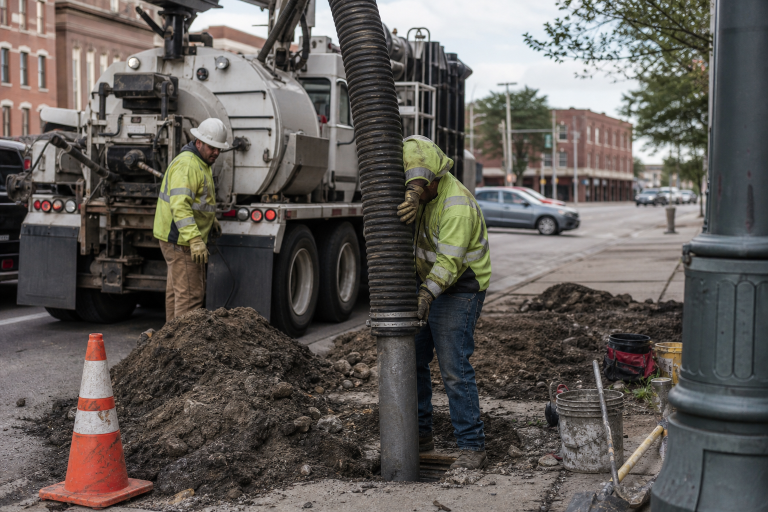
This approach is often selected when precision matters more than removing the largest possible volume of soil in the shortest time. It can complement conventional excavation by helping crews uncover a utility, clear a structure, or prepare a targeted area for the next phase of work.
Common Uses on Modern Jobsites
Utility Exposure and Daylighting
Daylighting means exposing a buried utility so its location, depth, and direction can be confirmed visually. This can help a project team plan clearances before drilling, installing a new line, repairing a pipe, or working near a congested utility corridor.
Hydro Excavation
Hydro excavation combines water with vacuum removal. Water can break apart dense soil, while the vacuum system collects the resulting slurry. The method requires a plan for water use, weather conditions, containment, and disposal of the material collected in the tank.
Sewer, Drainage, and Catch Basin Cleaning
Vacuum equipment may remove standing water, sediment, grit, leaves, mud, and loose debris from drainage structures and related systems. This work can improve access for inspection or maintenance, particularly where material cannot be removed efficiently by hand.
Industrial Cleanup and Spill Support
Specialized units can collect dry powders, wet sludge, process residue, and pooled liquids. Before work begins, the team should identify the material involved, review any applicable safety information, and confirm that the equipment and disposal plan are appropriate for the job.
The Safe-Digging Process
Safe work begins before the vacuum hose reaches the ground. Anyone planning an excavation should use the 811 notification process several business days before digging, then wait for utility responses and confirm that the work area has been marked.
- Review the site. Identify access routes, work limits, traffic patterns, overhead hazards, soil conditions, and nearby structures.
- Compare marks with plans. Treat surface markings as an important field reference and investigate discrepancies before proceeding.
- Create a controlled work zone. Keep unauthorized people away from hoses, open holes, moving vehicles, and tank discharge areas.
- Expose utilities carefully. Maintain communication between the equipment operator and ground crew, and stop if conditions do not match expectations.
- Document the finding. Record relevant location details before beginning the next construction activity.
- Protect the opening. Secure, backfill, or otherwise manage the exposed area according to project requirements.
Removing soil does not make an excavation safe for entry. The trenching and excavation guidance from OSHA emphasizes protection against cave-ins through sloping, shoring, or shielding, along with safe access, inspections, and control of water and other hazards.
Choosing an Equipment Setup
There is no universal vacuum setup for every project. A small utility exposure job may need a compact unit and a manageable hose route, while a larger cleanup may require greater tank capacity and more robust material-handling capability.
- Material: Is the crew removing dry soil, wet slurry, standing water, sludge, or mixed debris?
- Reach: How far must the hose extend from the parked unit to the work area?
- Access: Can the vehicle park safely without blocking traffic, entrances, or emergency routes?
- Capacity: How much material must be collected before the tank needs to be emptied?
- Water needs: Is water available, permitted, and practical for the site conditions?
- Disposal: Where can the collected material be transported and accepted?
Project Limits and Planning Concerns
Vacuum excavation has limits. It may not be the most practical method for long open trenches, large-scale bulk earthmoving, remote sites with restricted access, or projects where disposal locations are difficult to reach. Noise restrictions, frozen ground, overhead clearances, water availability, and traffic controls can also affect the work plan.
Teams should also distinguish between exposing an area and creating an excavation that workers must enter. If personnel need to enter a trench or excavation, the project must address protective systems, inspections, access, and all applicable safety requirements.
Time, Cost, and Site Disruption
Equipment cost is only one part of the decision. A useful comparison looks at the entire project impact, including mobilization, production time, access limitations, disposal, restoration needs, traffic disruption, and the potential consequences of damaging a buried utility.
- Consider whether targeted excavation could reduce surface restoration.
- Account for time spent locating, exposing, documenting, and protecting utilities.
- Plan tank dumping and material disposal before the unit arrives on site.
- Evaluate whether limited site access will add hose distance, labor, or traffic control needs.
- Include contingency time for unexpected utilities, changing soil conditions, or weather delays.
Field Planning Checklist
- Work limits and utility conflict areas are identified.
- 811 notifications are complete, and utility responses have been reviewed.
- Vehicle access, parking, and hose routing are approved.
- Traffic, pedestrian, and exclusion-zone controls are in place.
- The equipment matches the soil, liquid, sludge, or debris involved.
- Tank capacity and disposal arrangements are confirmed.
- Workers understand communication signals and stop-work expectations.
- Openings will be documented, protected, and restored as required.
- Emergency contacts and response procedures are available to the crew.
Final Thoughts
Vacuum excavation is most valuable when a project needs careful material removal around buried infrastructure, sensitive surfaces, or difficult-to-access areas. Used alongside accurate utility locating, trained operators, site controls, and sound excavation practices, it can help project teams make underground work more manageable and predictable.