
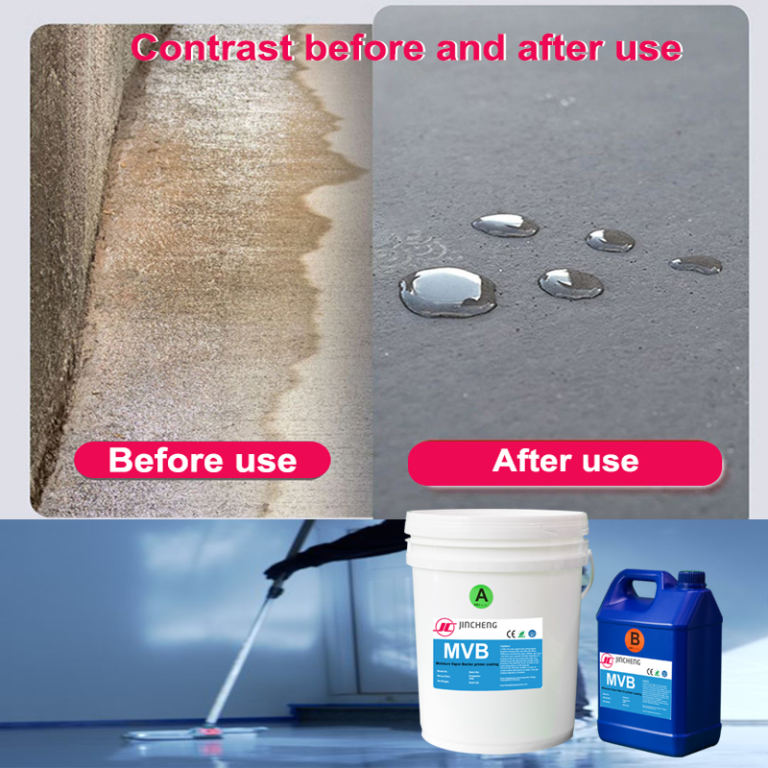
No contractor should specify or install an epoxy moisture vapor barrier without first testing the concrete slab. The moisture vapor emission rate determines whether a barrier is needed and what performance characteristics it must have. Skipping this step is gambling with the client’s money and the contractor’s reputation.
Several test methods are available, each with its own strengths and limitations. The calcium chloride test measures the rate of moisture vapor emission from the slab surface over a period of sixty to seventy-two hours. It is widely used and relatively inexpensive, but it only captures conditions at the time of testing and can be affected by ambient conditions.
The in-situ relative humidity test involves drilling holes into the slab, inserting probes, and allowing them to equilibrate. This method measures the moisture condition within the slab itself rather than just at the surface. It provides a more complete picture of the slab’s moisture state and is less affected by short-term environmental changes.
The plastic sheet test is a simple qualitative method that involves taping a plastic sheet to the concrete and observing whether moisture accumulates beneath it. It is not precise enough for specification purposes, but it can indicate whether further testing is warranted.
For critical projects, multiple test methods may be used to cross-check results. The contractor should document all testing, including the date, location, conditions, and results, and retain the records for future reference.
Understanding the Results
Test results must be interpreted in the context of the flooring system being installed. Different flooring materials have different tolerances for moisture vapor emission. An epoxy moisture vapor barrier may be required for one flooring system but not for another on the same slab.
The manufacturer of the flooring material or adhesive specifies the maximum allowable moisture vapor emission rate. The contractor should obtain this specification in writing and compare it to the test results. If the emission rate exceeds the tolerance, a barrier is required.
It is also important to consider that moisture conditions can change over time. A slab that tests within tolerance during dry weather may exceed tolerance during wet seasons. For critical installations, the contractor should consider seasonal variations and specify a barrier that provides an adequate margin of safety.
Selecting the Right Barrier Product
Not all epoxy moisture vapor barriers are the same. Products vary in permeability, solids content, application thickness, cure time, and compatibility with different flooring systems.
The permeability rating is the most important specification. It indicates how effectively the product blocks moisture vapor. Lower permeability means better performance. The product should be selected to provide a permeance rating below the maximum allowed by the flooring manufacturer.
The solids content affects the thickness of the cured film and the number of coats required. Higher solids products typically provide better barrier performance but may be more difficult to apply.
Cure time matters for scheduling. Some products cure quickly and allow flooring installation within twenty-four hours. Others require longer cure times. The contractor must plan the schedule accordingly.
Compatibility with the flooring system is essential. The barrier must be compatible with the adhesive or coating that will be applied over it. Some barriers require a primer or tie coat to ensure adhesion. The manufacturer should provide guidance on compatible systems.
Installation: Where Discipline Matters
Installing an epoxy moisture vapor barrier is not complicated, but it requires discipline. The surface must be properly prepared. The product must be mixed correctly. The application must be uniform and at the specified thickness. The cure must be allowed to complete before the flooring is installed.
Surface preparation for a moisture vapor barrier is similar to preparation for any epoxy coating. The concrete must be clean, dry, and profiled. Contaminants must be removed. Cracks and defects must be repaired. Moisture testing must confirm that the slab is within the acceptable range.
Mixing must follow the manufacturer’s instructions precisely. The ratio of components, the mixing time, and the induction period all affect the performance of the cured barrier. Improper mixing can result in incomplete cure, reduced permeability, or adhesion failure.
Application must achieve the specified thickness uniformly. Thin spots can allow moisture to pass through. The contractor should use a wet film gauge to verify thickness during application and a dry film gauge after cure.
Cure time must be respected. Installing flooring over a barrier that has not fully cured can trap solvents or moisture, leading to adhesion failure or other problems. The manufacturer’s cure schedule should be followed exactly.
Documentation and Warranty
Documentation protects both the contractor and the client. The contractor should document the testing results, the product selected, the application parameters, and the cure conditions. Photographs of the prepared surface and the applied barrier provide additional evidence of proper workmanship.
The manufacturer’s warranty should be reviewed and understood. Some warranties cover the barrier only. Others cover the entire flooring system if the barrier and flooring are from the same manufacturer. The contractor should explain the warranty terms to the client and provide copies of all documentation.
The Bottom Line
An epoxy moisture vapor barrier is a critical component of a successful flooring installation. It protects the flooring from moisture damage and extends the life of the system. But it only works if it is properly tested, correctly selected, and carefully installed. For contractors, mastering this process is essential to delivering reliable results and building a reputation for quality. The barrier may be hidden beneath the finished floor, but its performance determines whether that floor lasts for years or fails within months.