
Most buyers focus on piece price when selecting a metal stamping parts manufacturer. That focus is understandable, but it is also dangerous. The true cost of a stamping supplier includes factors that do not appear on the quote.
Quality failures are the most obvious hidden cost. A supplier that ships non-conforming parts forces the buyer to inspect, sort, rework, or scrap. If the defective parts reach the customer, the cost is far higher. Recalls, warranty claims, and reputational damage can dwarf the savings from a lower piece price.
Late deliveries are another hidden cost. A supplier that cannot meet the schedule forces the buyer to expedite, carry safety stock, or delay production. In industries with just-in-time manufacturing, a late delivery can shut down an assembly line.
Communication breakdowns are a third hidden cost. A supplier that does not respond to questions, does not report problems promptly, or does not collaborate on improvements creates friction that slows everything down.
The total cost of ownership is the correct metric. It includes piece price, tooling, freight, inventory carrying costs, quality costs, and the cost of managing the supplier relationship. A supplier with a higher piece price but better quality and reliability may be the more economical choice.
The Capability Questions That Matter Most
Before requesting a quote, a buyer should assess whether a manufacturer has the fundamental capabilities required for the part. Several questions cut through the marketing and reveal what a manufacturer can actually do.
The first question is about press capacity. What is the tonnage range of the presses? What is the bed size? What is the stroke length? A manufacturer with presses that are too small cannot produce large parts. A manufacturer with presses that are too large may not be cost-effective for small parts.
The second question is about tooling. Does the manufacturer design and build dies in-house? What is the lead time for new tooling? What is the expected tool life? A manufacturer who outsources tooling has less control over quality and schedule.
The third question is about materials. What materials does the manufacturer routinely stamp? Do they have experience with the specific alloy required? Can they source the material at a competitive price?
The fourth question is about tolerances. What tolerances can the manufacturer hold consistently? What inspection equipment do they have? Can they provide documentation of dimensional conformance?
The fifth question is about secondary operations. Does the manufacturer offer deburring, heat treating, plating, painting, or assembly? Can they manage these operations in-house or through qualified partners?
The Different Types of Metal Stamping Manufacturers
The stamping industry has several distinct tiers, each with its own capabilities and market focus.
High-volume manufacturers specialize in producing large quantities of parts at low unit cost. They use progressive dies, automated presses, and continuous feeding systems. They serve industries such as automotive and appliances where volumes are measured in millions of units.
Low-volume and prototype manufacturers focus on small batches, rapid turnaround, and design flexibility. They may use simple dies, laser cutting, or other methods to produce parts without the expense of hard tooling. They serve startups, design firms, and companies that need parts quickly for testing or limited production.
Precision manufacturers specialize in tight tolerances and complex geometries. They serve industries such as medical devices, aerospace, and electronics where performance is critical. They invest in high-precision presses, sophisticated inspection equipment, and skilled technicians.
Deep draw manufacturers specialize in forming three-dimensional shapes from flat metal. They produce cups, shells, enclosures, and other hollow parts. They serve industries such as automotive, appliances, and packaging.
Fine blanking manufacturers specialize in producing parts with smooth edges and tight tolerances. They serve industries that require high accuracy, such as automotive transmissions and medical devices.
The Quality Systems That Matter
Quality is not a vague concept in stamping. It is measured, documented, and verified. A manufacturer’s quality system determines whether parts meet specifications consistently.
The first element of a quality system is certification. ISO 9001 is the baseline. Industry-specific certifications such as IATF 16949 for automotive and AS9100 for aerospace indicate that the manufacturer has met additional requirements for those industries.
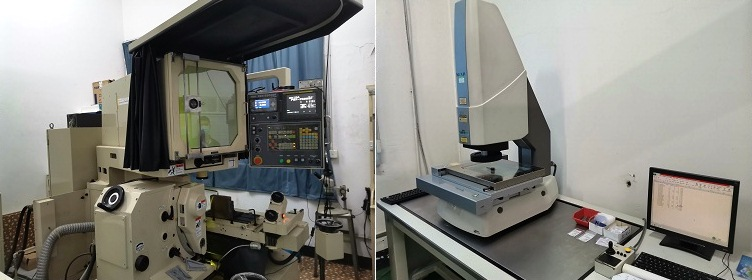
The second element is inspection equipment. A manufacturer should have calibrated measuring instruments, optical comparators, coordinate measuring machines, and other equipment appropriate to the parts they produce.
The third element is documentation. A manufacturer should maintain records of material certifications, production parameters, inspection results, and traceability. These records are essential for quality investigations and regulatory compliance.
The fourth element is process control. A manufacturer should use statistical process control, first article inspection, and other techniques to monitor and improve their processes.
The fifth element is corrective action. A manufacturer should have a system for investigating quality issues, identifying root causes, and implementing corrective actions that prevent recurrence.
The RFQ Process
The request for quote is the formal process by which a buyer asks a manufacturer to price a part. The RFQ should include the part drawing, the material specification, the tolerance requirements, the production volume, and the delivery schedule.
A good manufacturer will respond to the RFQ with a detailed quote that includes the piece price, the tooling cost, the lead time, and any assumptions or exceptions. They may also provide suggestions for reducing cost or improving manufacturability.
The buyer should compare quotes from multiple manufacturers before making a decision. The lowest price is not always the best value. The buyer should consider the total cost of ownership, including quality, lead time, communication, and risk.
The Bottom Line
A metal stamping parts manufacturer is more than a supplier. They are a partner in the production process. The choice of a manufacturer affects product quality, production costs, lead times, and long-term supply reliability. For engineers and buyers, understanding what these manufacturers do and how to evaluate them is essential to making a sound decision. The right manufacturer delivers not just parts but reliability, consistency, and technical support that keeps production running.